
Detian Li
Title: Space Metrology and China's Aerospace Missions
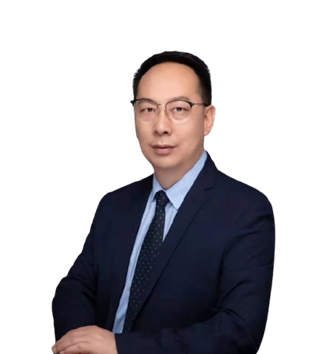
Li Detian, academician of Chinese Academy of Engineering, academician of the International Academy of Astronautics, has been selected into the National Outstanding Youth Project, the national "Millions of Talents Program" etc., currently serving as a technical consultant at the China Academy of Space Technology, director of the National Key Laboratory of Vacuum Technology and Physics, vice chairman of the China Society for Measurement, and editor in chief of "Vacuum and Cryogenics". He is an academic leader in the field of vacuum testing and metrology, and has long been engaged in research on vacuum metrology and multi parameters comprehensive testing in the vacuum environments. He led the team to solve the testing and measurement problems of vacuum neutral gases, vacuum plasmas, and complex vacuum effects. He made systematic contributions in measurement technologies, measurement standards, testing equipment, and engineering applications, and established a relatively complete vacuum testing and metrology system in China. The researches have been comprehensively and continuously applied on the ground, Earth orbit, and deep space.
Adrian Podoleanu

Title: Metrology of Coherence Gating in Biophotonics and Non destructive testing
Coherence gating, based on low coherence interferometry enables absolute measurement of distances, thickness, indices of refraction, Doppler shifts as well as deformations of the wavefront by the sample under test as well as by the optical elements employed. More recently, speckle variance assessment lead to dynamic measurements, of interest to angiography and vitality of tissue and cells. A necessity emerges for joint work of both communities working in biophotonics and metrology to work together to devise standards and procedures to enable proper comparison of measurement results. The presentation will refer to a recent trend in devising proper phantoms for coherence gating microscopy and optical coherence tomography that not only allow characterization of resolutions in microscopy, but proper quantification of penetration through scattering media. The presentation will also include recent research by the biophotonics community that can be harnessed to serve as novel tools for metrology, such as ultra fast bidirectional tunable lasers as well as novel signal processing techniques for dynamic and parallel measurement with examples from blood flow in the retina, embryology and pathogen assessment in fruits.
Adrian Podoleanu (Fellow of the Royal Academy of Engineering, of the Institute of Physics, of Optica, of SPIE and an International Fellow of Chinese Optical Society) is the Head of the Applied Optics Group, Professor of Biomedical Optics in the Department of Engineering, Mathematics and Physics, University of Kent, Canterbury, UK, an investigator of the Biomedical Research Centre, University College London (UCL) and Institute of Ophthalmology and honorary professor in the UCL and in the University of Medicine and Pharmacy, Timisoara. He received the Ph.D. degree in Electronics from the Electronics and Telecommunications Faculty, Technical University of Bucharest in 1984. He was a founder member of the Romanian Chapter of SPIE and its first Chairman (1992). He has obtained the first OCT images from the retina in the human eye and reported the first combined OCT/SLO instrument. Currently he serves as the Associate Secretary of the International Commission for Optics. AWARDS: Order of the Crown, officer, Royal House of Romania, 2017; Royal Society Wolfson Research Merit Award 2015; European Research Council, Advanced Research Fellowship, 2010-2015; Ambassador’s Diploma, Embassy of Romania in the UK, 2009;Leverhulme Research Fellowship, 2004 – 2006; Romanian Academy “Constantin Miculescu” prize for research in Lasers and Nonlinear Optics, 1984.
Email: ap11@kent.ac.uk
https://www.kent.ac.uk/physical-sciences/people/357/podoleanu-adrian
Applied Optics Group, University of Kent, Canterbury, United Kingdom
Christiaan S. Veldman

Title: The Evolution of Vibration Metrology
We take a look at why and how performing measurements evolved, with the focus on metrology in vibration. Contemplating some of the aspects (history, nature, individuals) that influenced this seemingly simple, yet complex and influential unit of measure, acceleration. Specific milestones in Metrology that shaped Global cohesion are discussed. We ask the question, where is the Digital age leading Vibration Metrology?
Ian was born on the 2nd of July 1965 in Klerksdorp, a small town in the North-West province of South Africa. He completed Secondary school in 1983 at Ferdinand Postma High, located in Potchefstroom, some 45 km North-East of Klerksdorp. He obtained a bursary in 1984 from the Atomic Energy Corporation (AEC) to study Electronic Engineering at the Technikon Pretoria. After he completed his Higher Diploma in Electronic Engineering in 1990, he accepted a position at the CSIR’s (Council for Science and Industrial Research) NML (National Metrology Laboratory) in May 1990. Ian was appointed as a Research and Development Engineer in the Dimensional Laboratory of the NML (now NMISA). His first assignment was developing a feedback system for the National Length Standards, two iodine stabilized HeNe lasers. This work prompted him to study further and in 1997 he completed his Masters Diploma in Electronic
Engineering.
As early as 1991 his job description started to change as he became involved in metrology. In 1994, he took on the responsibility of Project Leader of the Acoustics & Vibration Project of NMISA. His duties included the maintenance and dissemination of the Measurement Standards in the fields of Acoustics, Vibration, NDT and Rotational speed. He successfully participated in numerous CIPM and Regional Acoustics comparisons and in Vibration comparisons.
Key points of his 35-year career at NMISA included the development of National Measurement Standards in Acoustics and Vibration using primary methods. He represented South Africa at the CCAUV since its inception at the BIPM. Ian is serving on ISO WG 34, where he currently is the Project Leader for the review of ISO 16063-1 “Methods for the calibration of vibration and shock transducers — Part 1 Basic Concepts”. Ian is the Chair of SABS TC 76 Acoustics and Vibration Electro-technical Committee. He has been a member of IMEKO TC 22 for over 20 years.
Experienced in quality systems, such as ISO/IEC 17025, Ian is active in quality system implementation and assessment of accredited calibration laboratories. Ian acted as Technical Assessor for the National Metrology Laboratories of Australia, India and Kenya, by invitation.
Ian’s list of technical papers covers publications in Metrologia, ACTA-IMEKO, NCSLI and more. He presented his work, Locally and Internationally, at revered conferences.
For the past 9 months, Ian is enjoying life as a Pensioner in Pretoria, the Capital of South Africa.
Li Zhang
Title: Recent Advances in Dynamic Measurement : From Primary Standards to Engineering Applications
Dynamic measurement is a key means to reveal the processes and laws of nature. The evolution of mechanical quantities from static metrology to dynamic metrology, from fixed value measurement to dynamic process measurement, represents a major fundamental issue in modern metrology. With the development of science and technology and industrial upgrading in China, there is an urgent need to establish an advanced and comprehensive dynamic metrology system. This report explores methods to solve challenges in dynamic metrology, such as "inaccurate extreme value sources, inefficient transmission paths under extreme conditions, and suboptimal measurement results in complex engineering." It introduces the application of related research achievements in complex projects like aerospace propulsion system testing, the docking of underwater immersed tubes in the Hong Kong-Zhuhai-Macao Bridge, and high-speed rail collision tests.
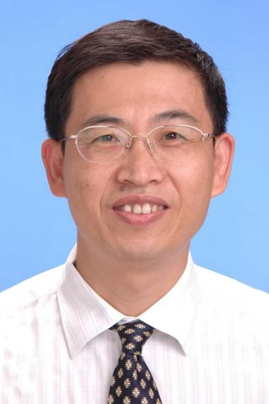
Prof. Dr. Li Zhang, Chief scientist. He mainly engages in research on dynamic measurement and fiber optic sensing technology. He has led the development of several primary dynamic measurement standards, such as pressure, force, torque and strain. He has compiled multiple national standards and technical specifications. He has received National Science and Technology Progress Prize. He is also the chairman of the National Vibration, Shock and rotation Speed Measurement Technical Committee.