
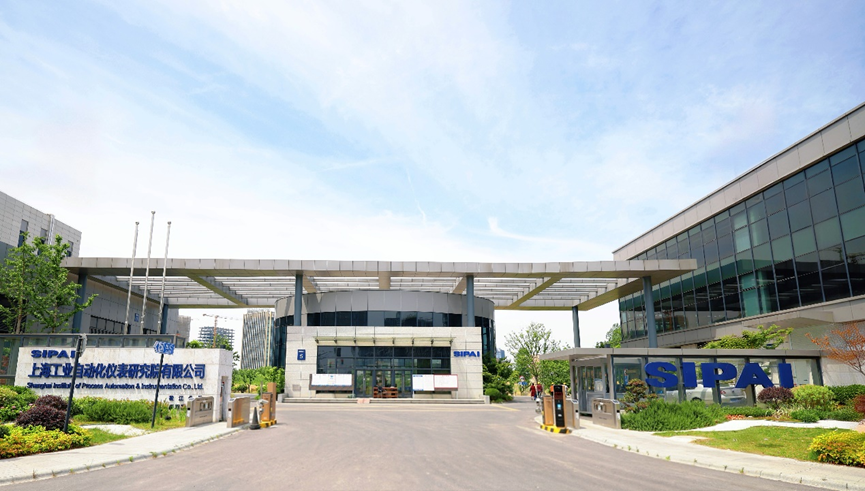
Shanghai Institute of Process Automation & Instrumentation Co., Ltd. (hereinafter referred to as "SIPAI") was established in October 1956. Originally a research institute directly affiliated with the former Ministry of Machine Industry, SIPAI serves as the industry’s designated technical authority. It is a comprehensive scientific research institution specializing in the research, development, manufacturing, application, and testing of industrial automation instruments and process control systems. As a high-tech enterprise, SIPAI provides professional technical services in the field of industrial automation.
SIPAI hosts multiple national and provincial-level innovation platforms, including the National Engineering Research Center for Industrial Process Automation, the National Energy R&D (Testing) Center for Nuclear Power Plant Instruments, and the Shanghai Engineering Technology Research Center for Intelligent Instruments and Control Systems. It also operates more than ten national and municipal-level testing centers, such as the National Supervision and Inspection Center for Industrial Control System Security and Automation Instruments.
SIPAI maintains a dedicated R&D team with extensive experience in industrial automation technologies, equipped with comprehensive testing facilities and methodologies. Over its 70-year history, SIPAI has played a pivotal role in advancing key and common technologies within the industry and promoting the industrialization of high-tech innovations, leveraging its strengths in scientific research, standard formulation, inspection and testing, industry services, technology transfer, and incubation of tech startups.
In recent years, SIPAI has aligned its strategic direction with national priorities and Shanghai’s vision to become a globally influential hub of scientific and technological innovation. Capitalizing on China’s ongoing industrial transformation and the deep integration of industrialization and informatization, SIPAI has harnessed its strengths as a leading innovation base and its established authority in the automation industry to advance R&D in key enabling technologies—particularly in smart manufacturing, industrial internet, and industrial control system (ICS) security.
SIPAI has delivered impactful solutions across high-value sectors such as aerospace, power generation equipment, petrochemicals, automotive manufacturing, and machinery, driving tangible progress in technological self-reliance and industrial upgrading. Today, SIPAI operates under a cohesive “5+1” core business framework: intelligent systems integration, high-end inspection and testing, ICS security, intelligent device manufacturing, technology-enabled services, and foundational R&D of common industrial technologies—positioning itself as a trusted partner in China’s journey toward advanced, secure, and intelligent industrial development.
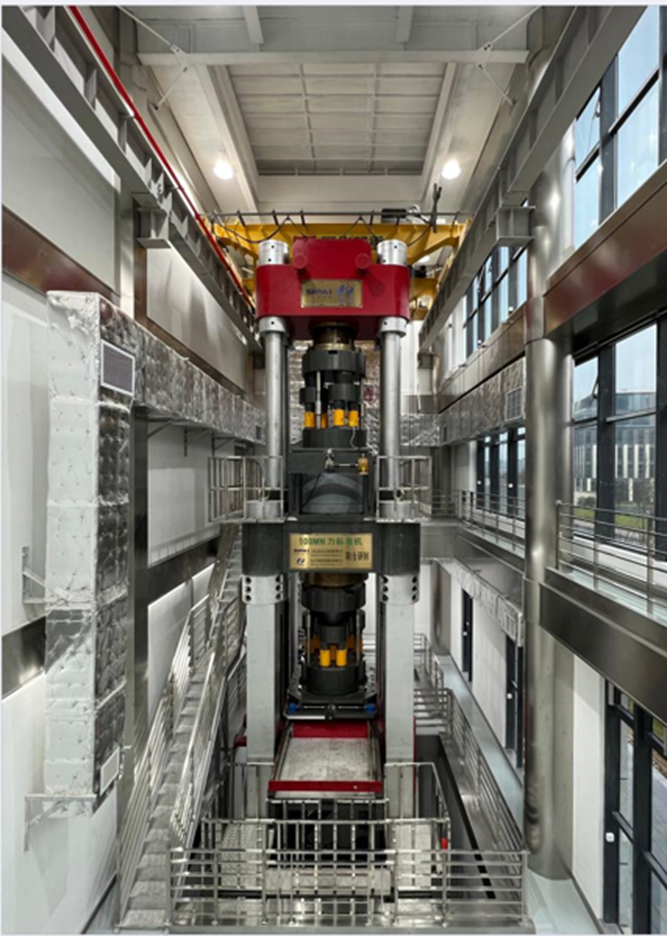
Unique in the world:100MN Force Standard Machine
In the field of force measurement for the steel industry, SIPAI’s rolling force and tension sensors, along with their accompanying instrumentation (digital signal processors), have been successfully deployed on dozens of cold and hot rolling production lines both domestically and internationally. The company also provides repair services for imported products to over 100 Chinese steel enterprises. Supported by the Shanghai Industrial Foundation Enhancement Initiative—"Development and Application of Ultra-High-Capacity Force Sensors and the 100 MN Force Standard Testing Machine"—SIPAI successfully developed the world’s first 100 MN (mega-newton) force standard testing machine. Leveraging this facility, SIPAI has localized the production of ultra-high-capacity rolling force sensors with capacities of 50 MN, 60 MN, and 70 MN. Notably, its 70 MN rolling force sensor is currently the highest-capacity force sensor in the world. This breakthrough has resolved key technical challenges in ultra-high-capacity force sensors and made significant contributions to the application of domestic force measurement products and systems.