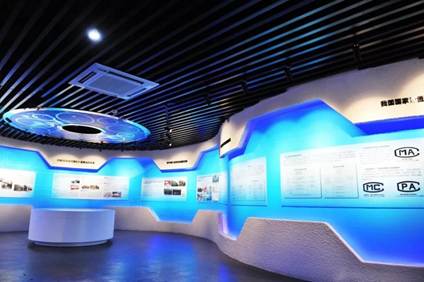
The Metrology Museum of China Jiliang University is located on its campus. The museum covers a total floor area of approximately 1,700 square meters, with the main exhibition hall spanning about 1,400 square meters. Its interior is divided into public activity areas, exhibition zones, cultural relic storage areas, and administrative offices. A cumulative investment of over 10 million yuan has been made in the museum, which now houses a collection of more than 2,100 cultural relics. Through various physical objects, texts, images, and multimedia displays arranged in chronological order, it presents a comprehensive overview of the history of ancient and modern metrology in China, and elaborates on the development and core essence of metrological culture. In terms of museum positioning, cultural depth, variety of exhibits, and content richness, it ranks among the top metrology-specific museums in China.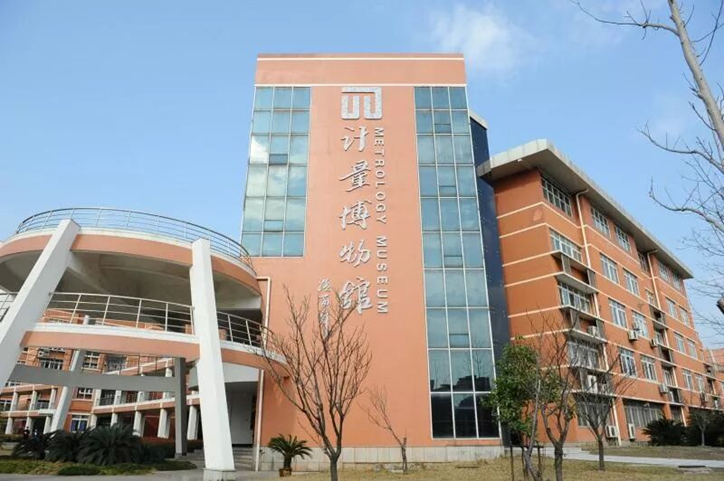
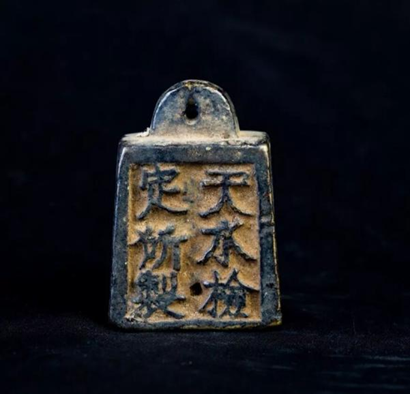
The Metrology Museum consists of two exhibition areas: Ancient Weights and Measures, and Modern Metrology. The Ancient Weights and Measures section artistically and systematically displays the origin, development, standardization, and refinement of ancient Chinese metrology, as well as its role in economic development and social progress throughout history. The collection is not only vast and diverse but also of high quality and broad value. Various weights and counterweights made of bronze, iron, porcelain, and stone are exquisitely crafted. Rulers from different dynasties, made of bronze, ivory, and wood, feature intricate carvings with clear and smooth lines. Measuring vessels such as Yi, Sheng, and Dou are dignified, robust, and elegant, forming a splendid and impressive collection. The museum also recreates scenes such as Emperor Qin Shi Huang’s unification of weights and measures, Liu Chenggui’s invention of the steelyard, and Emperor Kangxi’s method of determining length using millet grains, which captivate visitors’ attention.
The fourth-floor exhibition area is dedicated to modern metrology. It traces the transformation of traditional Chinese metrology initiated by the introduction of Western science by missionaries in the late Ming and early Qing dynasties, and further unfolds the evolution of modern metrological systems and management. It highlights the efforts made in the Republic of China to unify weights and measures and establish a modern metrological system, as well as advancements in temporal and spatial measurement. The exhibition also illustrates the historical development of metrology in New China, offering an in-depth analysis of the evolution of metrological institutions, the legalization of metrological management systems, metrological education and dissemination, scientific research in metrology, and the characteristics of contemporary metrological management systems.